Written and reviewed by Emily Barlow, Clinical Nutritionist
Key takeaways
- Key factors: Baby eczema is influenced by several factors, including the developing skin barrier, immune system and genetics.
- Gut-skin axis: The gut and skin communicate through the immune system, and research is exploring how the infant gut microbiome may relate to eczema.
- Feeding support: Breastfeeding can support a baby’s developing gut microbiome, while some infant formulas include prebiotics or human milk oligosaccharides (HMOs).
- Maternal diet: Breastfeeding mums generally do not need to avoid foods unless a suspected allergy has been assessed by a qualified healthcare professional.
- When to seek help: Seek medical advice is eczema is severe, infected, worsening quickly or affecting your baby's sleep, feeding or general wellbeing.
What is eczema and why does it affect so many children and babies?
Eczema, also known as atopic dermatitis, is an inflammatory skin condition that commonly presents as dry, itchy and inflamed patches of skin. It is one of the most common inflammatory skin conditions, and for many children it starts early in life, often within the first year.
A big part of the reason babies are so susceptible is that their skin is still developing. Their skin barrier is more vulnerable, loses moisture more easily and is still maturing during the early months of life. Research has linked differences in the skin barrier during early infancy with the development of eczema. Genetics also play a role, including variations in genes involved in building and maintaining the skin.
The immune system is also still developing during infancy. When the skin barrier is weakened, irritants and allergens can pass through the skin more easily and trigger an immune response. This can contribute to the familiar itch-scratch cycle. It is also one of the reasons eczema and food allergy can be closely linked. Babies with eczema have a higher risk of developing a food allergy, and exposure to food proteins through inflamed, broken skin may contribute to food sensitisation.
What is the gut-skin connection, and can gut health affect baby eczema?
The gut-skin axis: The gut and skin are in constant communication through the immune system, which is often referred to as the gut-skin axis. A large proportion of the immune system is located in and around the gut, and the gut microbiome plays an important role in immune development and regulation. Research has found differences in the gut microbiome of children with eczema, including lower microbial diversity in some studies, and some of these differences may occur before eczema develops.
Supporting your baby’s gut health: There are some really simple things parents can do to support a baby's developing gut.
- Breastfeeding, where it's possible, provides babies with human milk oligosaccharides (HMOs), which help support the development of a Bifidobacteria-rich gut microbiome, alongside antibodies and other immune-active components. For formula-fed babies, some infant formulas now contain HMOs, and clinical trials have found that specific HMO blends can influence gut microbiota development and markers of gut maturation.
- Once solids start, usually around six months when the baby is showing signs of developmental readiness, I encourage families to offer as much variety as they can, including a wide range of plant foods.
- Australia's updated 2026 allergy prevention guideline recommends introducing well-cooked egg and appropriate forms of peanut soon after solids begin, along with other common allergens, and continuing to offer them around once a week once introduced.
- And while antibiotics are absolutely needed at times, avoiding them when they aren't medically necessary can help minimise unnecessary disruption to the developing microbiome.
Probiotics and eczema: Research suggests that probiotics taken by mum during pregnancy and breastfeeding may reduce the risk of eczema in babies, although the evidence varies between probiotic strains and outcomes. This is one area where I wouldn't recommend simply picking a probiotic off the shelf, as the strain and dose matter.
Should a breastfeeding mum avoid certain foods if their baby has eczema?
This is probably the question I hear most in the clinic. For the majority of families, cutting foods out while breastfeeding isn't recommended as a way to prevent eczema or allergies. Australia's current allergy prevention guideline encourages breastfeeding without changes to mum's diet, and unnecessary restrictive diets can also affect mum's own nutritional intake.
That said, there are some situations where mum's diet can matter. A small proportion of breastfed babies with cow's milk allergy, for example, can react to small amounts of cow's milk protein that pass into breast milk.
In these cases, removing the suspected food may be appropriate, but it should be done with the support of a doctor, dietitian or appropriately qualified nutrition professional. The goal is to avoid unnecessary restriction while making sure mum is still getting enough nutrients such as calcium, iodine and protein.
What I'd rather see is mums eating a varied, nourishing diet with plenty of nutrient-dense foods, including omega-3-rich foods such as oily fish. There is some evidence that omega-3 supplementation during pregnancy and breastfeeding may reduce the risk of food sensitisation, particularly sensitisation to egg. Breastfeeding is hard enough without unnecessary restrictions on top of it.
What should parents look for in infant formula if their baby has eczema?
Breastmilk is recommended as a baby's first food, but when formula is needed, parents can feel reassured that infant formula sold in Australia is regulated under the Australia New Zealand Food Standards Code.
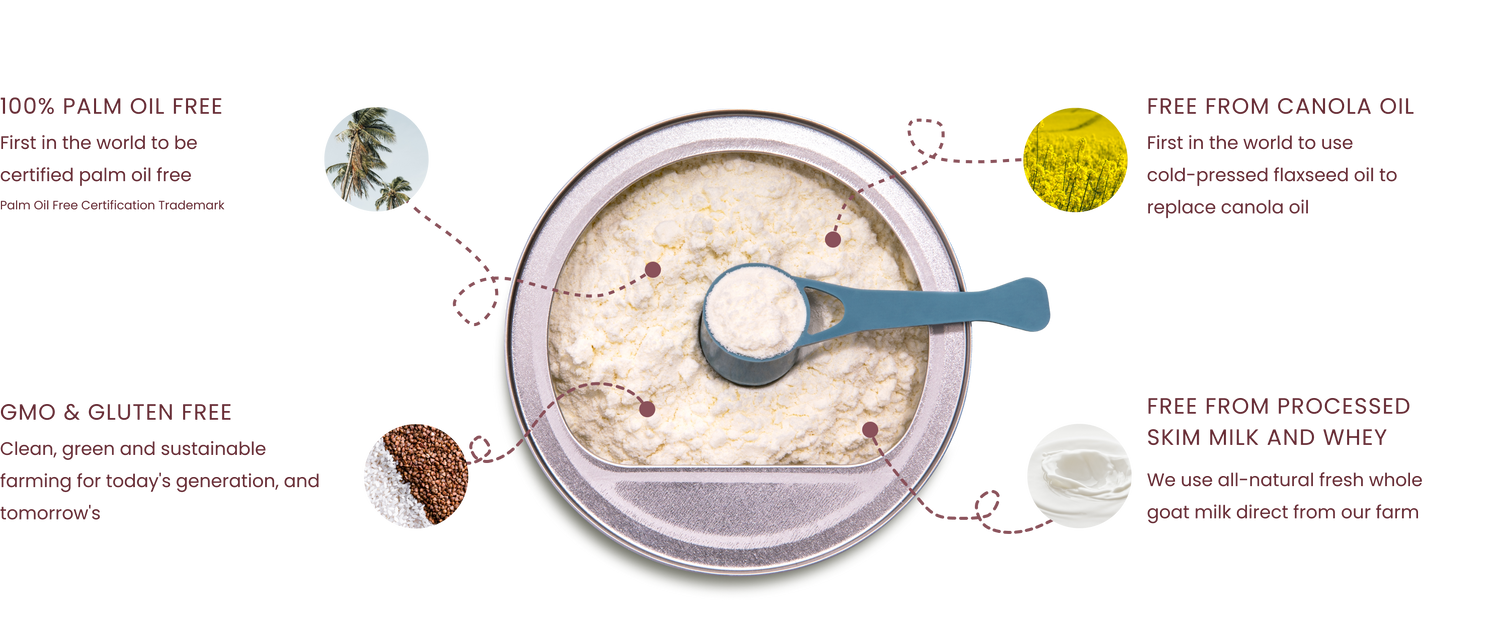
- Choosing a formula: It’s important to look at the individual baby and whether they are tolerating the formula well. The type of fat used is one consideration. Some formulas contain alpha-linolenic acid (ALA), a plant-based omega-3 found in ingredients such as flaxseed oil. The body can convert ALA into the longer-chain omega-3 fats EPA and DHA, although this conversion is limited. Many infant formulas also contain DHA.
- Prebiotics and HMOS: Prebiotics are another consideration. HMOs and other prebiotic ingredients are now included in some formulas to help support beneficial gut bacteria, and clinical research has shown that specific HMO blends can influence gut microbiota development and markers of gut maturation.
- Goat milk formula: Goat milk is another ingredient parents often ask me about. Goat milk has been evaluated as a protein source for infant formula, and goat-milk-based formulas are permitted when they are formulated to meet infant nutritional requirements. Goat milk naturally contains a range of oligosaccharides, and laboratory research suggests that some of these can interact with beneficial bacteria such as Bifidobacteria.
In a study of 428 infants, there were no significant differences in overall gut microbiota diversity between formula-fed and breastfed infants after six months, although some differences in specific bacterial groups were observed.
It is important to note that goat milk isn't a suitable substitute for babies with diagnosed cow's milk allergy. Goat and cow's milk proteins are sufficiently similar that cross-reactivity is common, so babies with cow's milk allergy may need a specialised formula recommended by their doctor.
Some parents notice their babies are more comfortable on certain milk proteins. How can A1 vs A2 affect an infant's gut and therefore skin health?
Cow's milk contains a protein called beta-casein, which comes in two main types, A1 and A2. Regular cow's milk can contain both, whereas A2 milk comes from cows that produce only the A2 type. Goat milk is also made up of A2-type beta-casein.
The difference comes down partly to how these proteins are digested. When A1 beta-casein is digested, it can release a peptide called BCM-7. Laboratory and animal research has suggested that this may influence gastrointestinal motility and inflammatory pathways, although the clinical significance of this in humans is still uncertain.
Some studies in adults have found that people experience fewer digestive symptoms, such as abdominal pain, when consuming A2-only milk compared with milk containing both A1 and A2 beta-casein.
It's still an emerging area, and most of the research has been conducted in adults rather than infants. A systematic review found that the evidence around A1 beta-casein and health outcomes in humans remains limited and varies depending on the outcome being studied.
So while a particular milk protein may be better tolerated by an individual baby, we can't currently say that A2 protein prevents or treats eczema.
What I tell parents is that if your baby genuinely seems more settled on a particular formula, that's useful information to share with your practitioner. However, formula changes should be made with guidance, particularly if the eczema is significant.
Ongoing vomiting, blood or mucus in the stool, poor weight gain or severe eczema can sometimes be signs of cow's milk allergy and should be assessed by a doctor rather than simply switching between standard formulas.
How can parents support their baby's skin barrier at home?
When it comes to eczema, I always come back to the basics. They sound simple, but doing them consistently can make a big difference.
Once eczema is present, regular moisturising is one of the most important parts of managing the skin barrier. Unperfumed emollients should be applied generously and regularly, including when the eczema is clear.
Thicker creams or ointments are often more useful than lighter lotions, particularly when the skin is very dry. It can also help to choose moisturisers and body washes that carry the Eczema Association of Australasia's product approval.
It's worth noting that this is different from using moisturiser to try to prevent eczema in an otherwise healthy baby. Research has found that routinely moisturising healthy babies from birth does not prevent eczema from developing.
Bath time should be comfortable and not overly hot. An emollient or soap-free wash can be used instead of conventional soap or detergent-based products. After bathing, gently pat the skin dry and apply an unperfumed emollient rather than rubbing the skin.
It also helps to reduce common irritants such as fragranced products, bubble baths, harsh detergents and scratchy fabrics like wool. Soft cotton clothing and a fragrance-free laundry detergent are simple swaps to make.
Overheating can also aggravate itching, so dressing little ones in light layers and keeping their sleep environment comfortable can help. Keeping nails short can reduce the damage caused by scratching.
Alongside all of this, I think it's important to look at the bigger picture. A varied diet, adequate nutrition and a well-supported gut are all part of supporting overall health, but nutrition should sit alongside appropriate medical and skincare treatment rather than replacing it.
When should I see a healthcare professional about my baby's skin and eczema?
I always tell parents to trust their gut (no pun intended!). If something doesn't feel right, it's worth getting it checked. In particular, it's a good idea to see your GP if the eczema isn't improving with consistent moisturising and gentle skincare, or if it's starting to affect your child's sleep, feeding or general wellbeing.
The same goes if the skin looks infected, such as becoming increasingly painful, weepy or crusted, or if your child develops a fever. If you suspect a food is causing a reaction, or your child has severe eczema that started early in infancy, your GP can assess whether an allergy referral is appropriate.
If your child's eczema suddenly becomes painful and worsens quickly, or you notice clusters of blisters or small punched-out sores, please seek medical care the same day. This can be a sign of eczema herpeticum, a serious viral infection that requires prompt treatment. And any signs of a serious allergic reaction, such as facial swelling, hives accompanied by vomiting, or difficulty breathing, require emergency medical care.
Once medical causes have been assessed, working with a qualified nutritionist or dietitian can be a helpful next step to look at the bigger picture, including diet, nutrition and gut health alongside your child's medical care.
Frequently asked questions
Can gut health affect baby eczema?
The gut microbiome plays an important role in immune system development, and research suggests that differences in the gut microbiome may be associated with eczema in infants. However, the relationship is complex, and eczema is influenced by multiple factors, including genetics, skin barrier function and environmental triggers.
Can changing a baby's diet help eczema?
Dietary changes may help some babies if a confirmed food allergy is contributing to eczema, but eliminating foods without a clear reason is unlikely to help most babies. Unnecessary restriction can compromise nutritional intake, so suspected food allergies should be assessed with a qualified healthcare professional.
Should breastfeeding mums avoid dairy if their baby has eczema?
No, breastfeeding mothers do not routinely need to avoid dairy if their baby has eczema. Cow’s milk protein allergy can contribute to symptoms in some infants, but an elimination diet should only be considered when clinically indicated and with appropriate healthcare guidance.
Can probiotics help with baby eczema?
The relationship between the gut microbiome and eczema is an active area of research, but evidence for probiotics as a treatment remains mixed. Their effects can vary depending on the specific strains used, and probiotics should not replace established eczema management or be given to infants without appropriate healthcare guidance.